
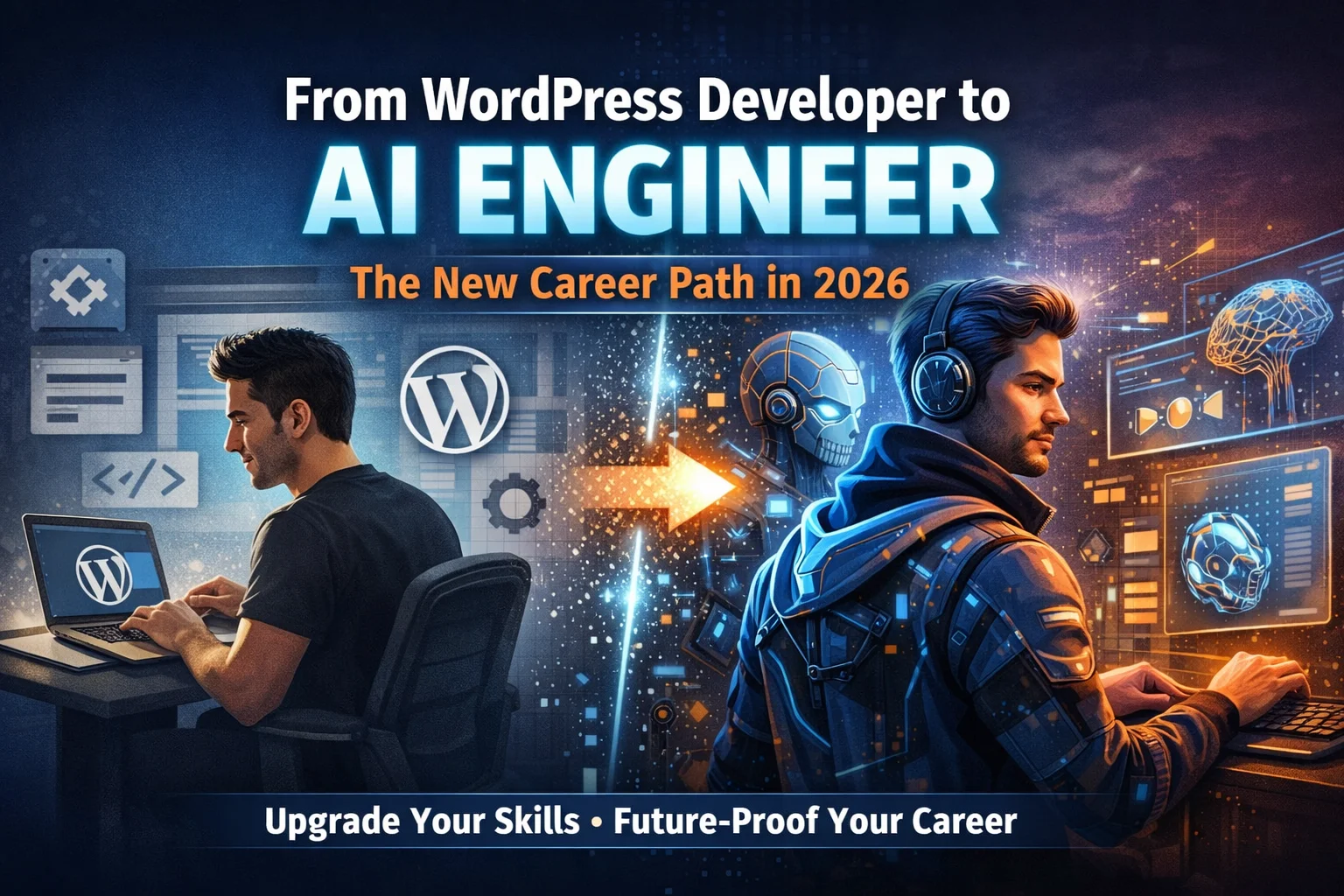

The role of a WordPress developer is evolving faster than ever before. What once revolved around themes, plugins, and CMS customization is now expanding into a much broader landscape—Artificial Intelligence (AI), automation, and intelligent user experiences.
In 2026, the most successful developers are no longer just building websites—they are building intelligent systems.
This shift has created a new career path:
👉 From WordPress Developer → AI Engineer
If you are a developer working with WordPress today, this is not just an opportunity—it’s a necessity.
🌍 Why This Shift Is Happening
The web is changing.
Traditional websites are becoming static, predictable, and less engaging. Meanwhile, AI-powered platforms are delivering:
- Personalized user experiences
- Conversational interfaces
- Smart search and recommendations
- Automated content generation
Users no longer want to browse—they want answers.
Key Industry Changes Driving This Shift
- Rise of AI tools (ChatGPT, Claude, Gemini)
- Growth of headless CMS architecture
- Demand for automation in business workflows
- AI-powered search replacing traditional SEO
👉 This means developers must evolve beyond UI and CMS logic.
🧠 What Is an AI Engineer (In Practical Terms)?
An AI Engineer is not just someone building complex neural networks.
In real-world web development, an AI Engineer focuses on:
- Integrating AI APIs into applications
- Building intelligent workflows
- Creating chatbots and assistants
- Implementing semantic search
- Automating decision-making systems
👉 In simple terms:
You are adding “thinking capability” to software.
🔄 WordPress Developer vs AI Engineer
| Skill Area | WordPress Developer | AI Engineer |
|---|---|---|
| Core Work | Themes, Plugins | AI Integration, Automation |
| Backend | PHP, MySQL | APIs, Python, Node.js |
| Frontend | HTML, CSS, JS | React + AI Interfaces |
| Data | Basic CMS Data | Embeddings, Vector DB |
| Goal | Build websites | Build intelligent systems |
👉 The difference is not replacement—it’s evolution.
⚡ The New Skill Stack You Need
To transition into an AI Engineer role, you don’t need to abandon WordPress—you need to expand your stack.
1. AI APIs & Tools
- OpenAI API (GPT models)
- Embeddings & vector search
- AI chat systems
👉 Start by integrating AI into WordPress features like:
- Smart search
- AI chat assistant
- Content suggestions
2. JavaScript Frameworks (Very Important)
Modern AI apps require dynamic frontends.
Learn:
- React.js or Next.js
- API handling (REST / GraphQL)
👉 This is essential for headless WordPress setups
3. Headless WordPress
Instead of using WordPress as frontend + backend:
👉 Use it as a content engine (API)
Stack Example:
- WordPress (backend)
- Next.js (frontend)
- AI APIs (intelligence layer)
4. Databases & AI Storage
You must understand:
- Vector databases (Pinecone, Weaviate)
- Storing embeddings
- Semantic search logic
👉 This powers:
- AI search
- Recommendations
- Chat memory
5. Automation & Workflows
Learn tools like:
- Zapier / Make (no-code automation)
- Custom backend workflows
👉 Example:
User submits form → AI analyzes → auto response → CRM update
🧩 Real Use Cases You Can Build
Here’s how you can practically transition:
1. AI Chatbot for WordPress
- Train chatbot using site content
- Answer user queries automatically
2. Smart Search System
- Replace basic search with AI search
- Show contextual results
3. AI Content Assistant (Inside WP Admin)
- Auto-generate blog drafts
- SEO suggestions
- Meta descriptions
4. Personalized Website Experience
- Show dynamic content based on user behavior
- AI-driven recommendations
5. AI Lead Qualification System
- Chatbot collects user data
- AI evaluates lead quality
- Sends to CRM automatically
📈 Career Growth & Opportunities
This transition opens massive opportunities:
💰 High-Income Skills
- AI integration developer
- SaaS builder
- Automation consultant
- Headless architect
🌐 Global Demand
Companies are actively hiring:
- AI developers
- Automation engineers
- Conversational UX designers
👉 Even freelancers are earning premium rates for AI solutions
🚧 Challenges You’ll Face
Let’s be real—this transition is not easy.
Common Challenges:
- Learning curve (AI concepts)
- Moving beyond PHP comfort zone
- Understanding APIs & data flow
- Keeping up with fast-changing tech
👉 But the advantage?
You already understand web architecture, which gives you a huge head start.
🛣️ Step-by-Step Roadmap
Here’s a practical roadmap:
Step 1:
Master JavaScript + APIs
Step 2:
Learn OpenAI / AI API integration
Step 3:
Build small AI features in WordPress
Step 4:
Move to headless architecture
Step 5:
Learn vector databases & embeddings
Step 6:
Build a complete AI-powered project
🔮 The Future: What Happens Next?
In the next 2–3 years:
- Websites will become AI assistants
- Search will become conversational
- Static pages will decline
- Automation will replace manual workflows
👉 WordPress developers who don’t adapt may struggle.
👉 Those who evolve will lead the industry.
🏁 Conclusion
The transition from WordPress Developer to AI Engineer is not about changing careers—it’s about upgrading your capabilities.

